Dental Bridges vs. Dental Implants: Which Option Is Right for You?
Losing a tooth can be uncomfortable and inconvenient. Whether it’s from decay, injury, or gum disease, that empty space often affects more than just your smile. Chewing can feel awkward, nearby teeth may shift, and many people notice a drop in confidence when they talk or laugh. The good news is that modern dentistry offers reliable options for replacing missing teeth. Two of the most common options are dental bridges and dental implants.
If you’ve been wondering how these treatments compare, let’s walk through them to see which one fits your lifestyle, budget, and goals best.
What Is a Dental Bridge?
A dental bridge literally “bridges” the gap left by a missing tooth. It’s made up of one or more artificial teeth, anchored in place by the natural teeth on either side of the gap. To hold the artificial teeth in place, your dentist reshapes the teeth on either side, removing some enamel and placing crowns over them to support the bridge.
Benefits of Dental Bridges
Dental bridges have been around for a long time, and they’re a familiar solution for many patients. One of their biggest advantages is speed. In most cases, a bridge can be completed in just a few visits over a couple of weeks. If you want a quicker fix, that can be appealing.
Bridges also tend to cost less upfront than implants, which makes them an option if your budget is a major concern. Once placed, a bridge restores the look of your smile and helps with basic chewing and speaking fairly quickly.
Drawbacks of Dental Bridges
That said, bridges do come with trade-offs. To place a bridge, the healthy teeth next to the missing tooth must be filed down to support the crowns. This permanently alters those teeth, even if they were perfectly healthy to begin with.
Bridges also don’t address what’s happening beneath the surface. When a tooth is missing, the jawbone in that area no longer receives stimulation from chewing and can slowly shrink over time. A bridge sits on top of the gums, so it doesn’t help prevent this bone loss.
In terms of longevity, bridges typically last 7–15 years with good care. They may need to be replaced if the supporting teeth develop decay or other issues.
What Is a Dental Implant?
A dental implant replaces both the root and the crown of a missing tooth. A small titanium post is placed in the jawbone, where it gradually bonds with the surrounding bone. Once healed, a custom crown is attached, creating a tooth that looks and functions very much like a natural one.
Benefits of Dental Implants
Dental implants are often considered the highest standard for tooth replacement, and for good reason. Because the implant fuses with the jawbone, it provides stability that closely mimics a natural tooth root. This helps maintain bone density and supports the overall structure of your jaw and facial appearance.
Unlike bridges, implants don’t rely on neighboring teeth for support. Your surrounding teeth stay exactly as they are, which is a big win for long-term oral health.
From a functional standpoint, implants feel very natural. Chewing, speaking, and smiling usually feel effortless, and many patients say they forget which tooth the implant is in. With proper care, implants can last decades and even a lifetime. That makes them an excellent investment in your oral health and appearance.
Drawbacks of Dental Implants
Implants do take more time. The process involves surgery and a healing period that can last several months before the final crown is placed. For patients hoping for immediate results, this timeline may seem to take forever, but afterward, patients say that implants are well worth the wait!
The upfront cost of implants is also higher than that of bridges. However, when you factor in their durability and the reduced need for future replacements or repairs, many patients find that the long-term value, comfort, and natural look and feel of implants outweigh the cost.
Not everyone is an ideal candidate right away. Adequate bone volume and good overall health are important, though procedures like bone grafting can often make implants possible even when bone loss has occurred.
Comparing the Two Side by Side
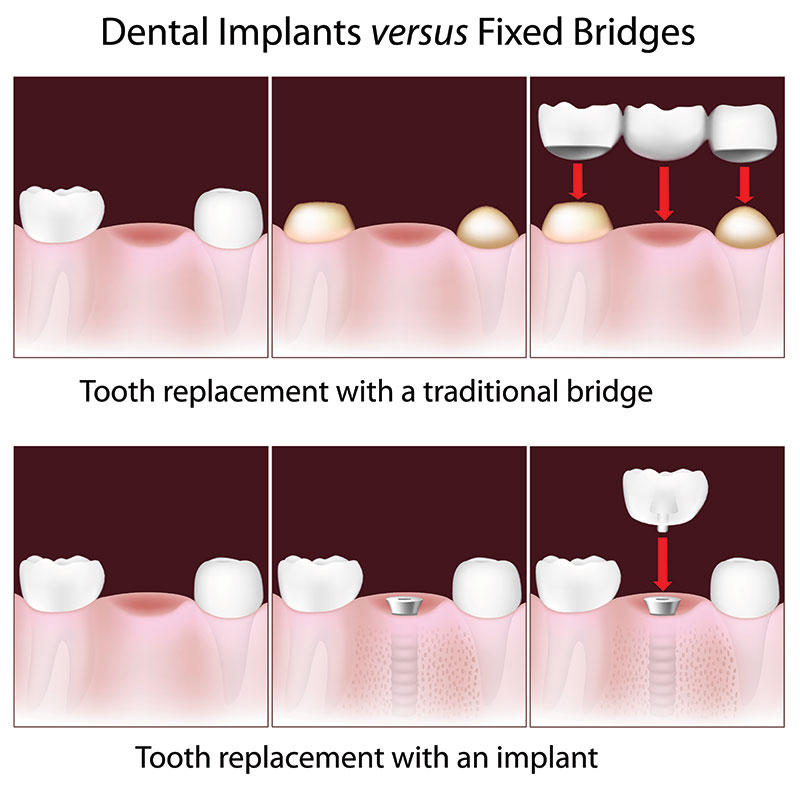
When you step back and compare dental bridges and implants, the biggest difference lies in how they treat the mouth as a whole.
Bridges focus on replacing the visible part of the tooth and quickly filling the gap. Implants replace the entire tooth structure, from root to crown, supporting both appearance and oral health over time.
For someone seeking a short-term solution or facing specific financial limitations, a bridge loan may be appropriate. But for patients who want a durable, natural-feeling replacement that supports jawbone health and protects neighboring teeth, implants often stand out as the stronger choice that will last for decades.
So, Which Should You Choose?
There’s no one-size-fits-all answer. Your overall health, oral condition, timeline, and goals all play a role in deciding the best option. That’s where an experienced oral surgeon can make a real difference. The surgeons at Pasqual Oral & Maxillofacial Surgery can help you look at the full picture and guide you toward a solution that fits both your needs today and your smile years from now.
If you’re missing a tooth and weighing your options, think of it as an investment in your comfort, confidence, and long-term oral health. Asking questions and understanding the pros and cons is the first step toward a decision you’ll feel good about every time you smile. To explore your options with an expert, contact Pasqual OMS today to schedule a consultation.